
New Origin Pyramid for Qualität and Prädikat Wines
In future, the quality of a German wine will be determined by its origin.
Facts
New Origin Pyramid for Qualität and Prädikat Wines
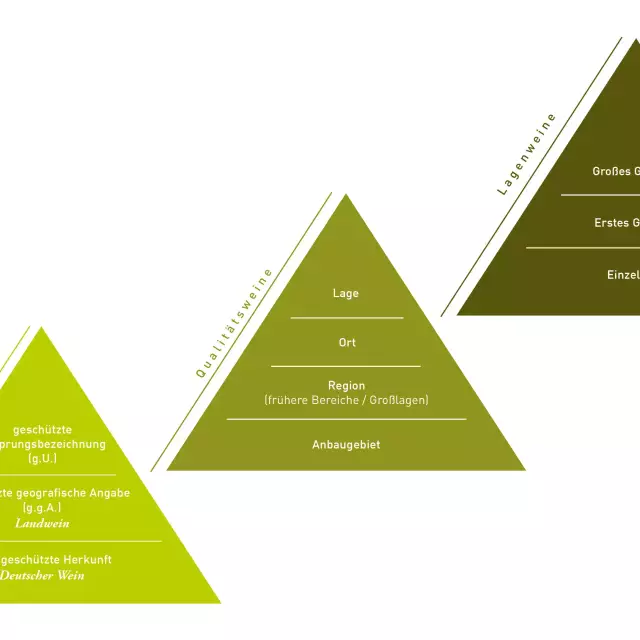
From 2021, the legislature has created a more differentiated pyramid of origin for Qualität and Prädikat wines with a protected designation of origin (PDO). It is structured in four levels and follows the tenet "the smaller the origin, the higher the quality". The top of this pyramid is formed by the single vineyard wines, which in turn can be subdivided into three levels: At the top are the Großes Gewächs with the strictest quality requirements, followed by the Erstes Gewächs, then below these, the remaining wines from other single vineyards.
Wines with the name Großes Gewächs will now be at the top of the single vineyard wines. They comprise exclusively of white and red wines that have been made from a single grape variety that matches the regional profile. The hand-picked grapes must not exceed a yield of 50 hectolitres per hectare. The grape must used for production is required to have a natural minimum alcohol content of at least twelve percent by volume and come from a single vineyard or a smaller parcel within a classified site. The wine must be ‘trocken’ (dry) and undergo sensory evaluation by an examination committee. The year of vintage must always be indicated on the label. White wines of this highest quality level may only be sold from September 1st of the following year. For red wines, the period is extended by a further nine months, i.e., until June 1st of the second year after the harvest.
The designation Erstes Gewächs also only applies to white and red wines that have been made from a single grape variety that matches the regional profile. The grapes must be picked selectively and not exceed a yield of 60 hectolitres per hectare in flat growing areas or 70 hectolitres per hectare on steep slopes. The must used for production is required to have a natural minimum alcohol content of at least 11 percent by volume and come from a single vineyard or a smaller parcel within a classified site. The exclusively dry wine can only be offered for sale from March 1st of the following year and must indicate the vintage on the label. The region protection associations can prescribe a separate sensory test for the Erstes Gewächs wines.
For the Großes Gewächs and Erstes Gewächs wines, the region protection associations determine the grape varieties and other special sensory characteristics that match the regional profile. They can also define additional requirements for the use of the designations, such as certain maximum yields per hectare or minimum must weights.
Associations that already use the terms Großes Gewächs and Erstes Gewächs may continue to use them if they meet certain minimum requirements from the wine ordinance, for example with regard to grape varieties, yields, harvest regulations or the taste profile.
For all other still wines and sparkling wines with a designation of an individual vineyard or classified site, they may be produced from one or more grape varieties, as specified by the associations, and the grapes must be ripened to at least Kabinett quality. The earliest time for these wines to be sold is also March 1st of the following year.
The name of a single vineyard must always be given on the label together with the name of the village or district.
Ortsweine (Village wines)
Wines and sparkling wines that bear the name of a village or a district as a designation of origin, so-called Ortsweine (village wines), are on the level below the single vineyard wines in the new hierarchy. In terms of taste, they reflect the characteristics of the local vineyards.
The grape must for these wines must be of at least Kabinett quality and they may not be sold before December 15 of the year of harvest.
Region wines
The category of Region wines and sparkling wines (Sekt) is also new in the amended German wine legislation. It is used to denote still or sparkling wines whose grapes come from a wine-growing area or a Großlage - a large site that spans communes or districts. These wines are identified by placing the term "Region" in front of the respective area or name of the large site. A district or part of a village name may no longer be used together with a Großlage. This is only permitted for single-vineyards wine.
Winegrowing area / Protected Designation of Origin (PDO / g.U.)
At the lowest level of the Qualitätswein pyramid are wines and sparkling wines whose grapes come from a specified winegrowing area, but otherwise do not have a narrower geographical name. The quality requirements for them have not changed with the new wine legislation.
According to the new wine law, for all Qualität and Prädikat wines, the term "Qualitätswein" can now also be replaced by the indication "wine with a protected designation of origin" combined with the name of a winegrowing area.
Transition periods
The legislature has granted a transition period for PDO (g.U.) wines. Up to and including the harvest year 2025, they may still be labelled in accordance with the previously applicable regulations and placed on the market until the remaining stock is sold. Großes Gewächs and Erstes Gewächs wines can still be labelled according to the previously applicable regulations and placed on the market up to and including the year 2023.
When are the wines of the highest quality level (Großes Gewächs) allowed to be marketed?
White wines of this highest quality level may only be put on sale from September 1 of the following year, and for red wines the deadline is extended by a further nine months, i.e. until June 1 of the second year after the harvest. The year of harvest must always be indicated
Varietals

More recipe ideas
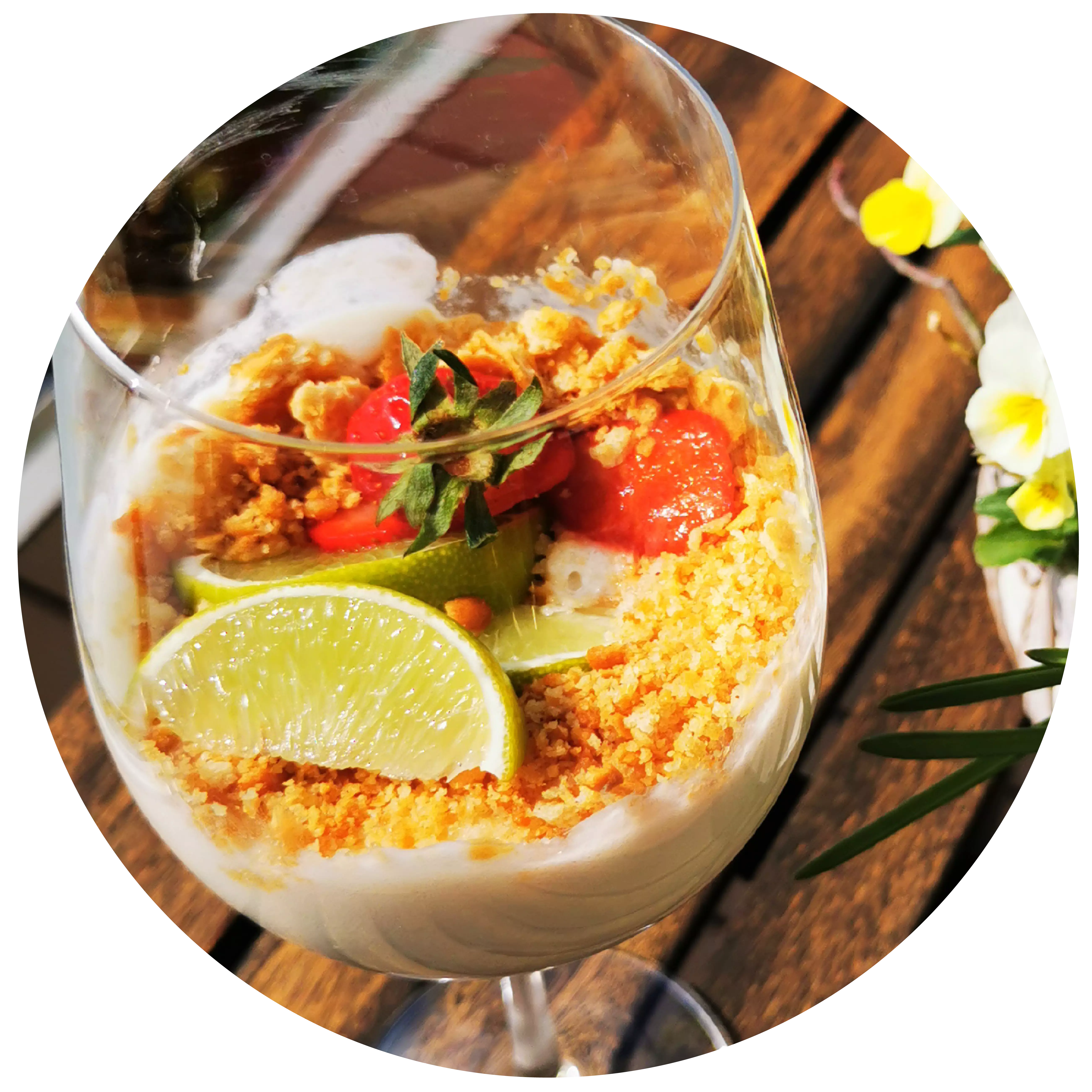
with dry sparkling wine Sparkling wine and lime dessert
with dry sparkling wine
- 300ml Winzersekt
- 4 Limetten
- 100g Zucker
- 30g Speisestärke
- 100g Butterkekse
- 50g ungesalzene Butter
- 2 Eiweiße
- 50g grieschicher Joghurt
- 150g Schlagsahne
Pour the sparkling wine and sugar into a pan. Chill the remaining sparkling wine. Wash 1 lime with hot water and finely grate the zest. Halve the lime and 2 others, squeeze out the juice and mix with the cornflour. Pour everything into the pan and bring to the boil briefly. Remove the pan from the heat and chill the cream in the fridge.
Fill the shortbread biscuits into a freezer bag, crush with a rolling pin and place in a bowl. Melt the butter in a pan, pour over the crumbled shortbread biscuits, add a pinch of salt and mix well. Leave to cool briefly, divide half into large wine glasses and press down firmly.
Cut the lime into slices. Beat the egg whites with salt until stiff. Stir the yoghurt into the chilled champagne and lime cream. Whip the cream until stiff and fold into the cooled cream, one after the other, together with the beaten egg whites. Spread half over wine glasses, add another layer of shortbread biscuits and finish with a layer of cream. Garnish with lime slices and pour in the remaining sparkling wine. Toast and enjoy!
- Riesling (trocken)
- Pinot Blanc (trocken)
with pumpkin and white wine sauce Pasta with pumpkin and white wine sauce
with pumpkin and white wine sauce
- 750 Gramm Butternut-Kürbis(se)
- 3 kleine Zwiebeln
- 2 Zehen Knoblauch
- 1 Becher Crème fraîche
- 250 ml trockener Weißwein
- 500 ml Gemüsebrühe
- 25 Gramm Parmesan oder ähnlicher Hartkäse
- 400 Gramm Spaghetti oder andere Nudeln
- nach Geschmack Salz, Pfeffer, Zucker
- 4 EL Kürbiskerne, evtl. gehackt
- nach Belieben Muskat, Thymian
Sauté the garlic and onions until translucent. Dice the butternut squash and add, season with pepper and sugar. When the cubes are still firm, pour in the white wine and vegetable stock. Continue cooking until the squash is firm to the bite.
In the meantime, cook and drain the pasta.
Add the thyme, nutmeg, salt and crème fraîche to the boiling pumpkin, bring to the boil and thicken. Stir in the parmesan and season to taste. You can also crush some diced pumpkin to make the sauce sweeter.
Arrange the pasta on plates and top with the pumpkin sauce.
Sprinkle with pumpkin seeds.
- Scheurebe (trocken)

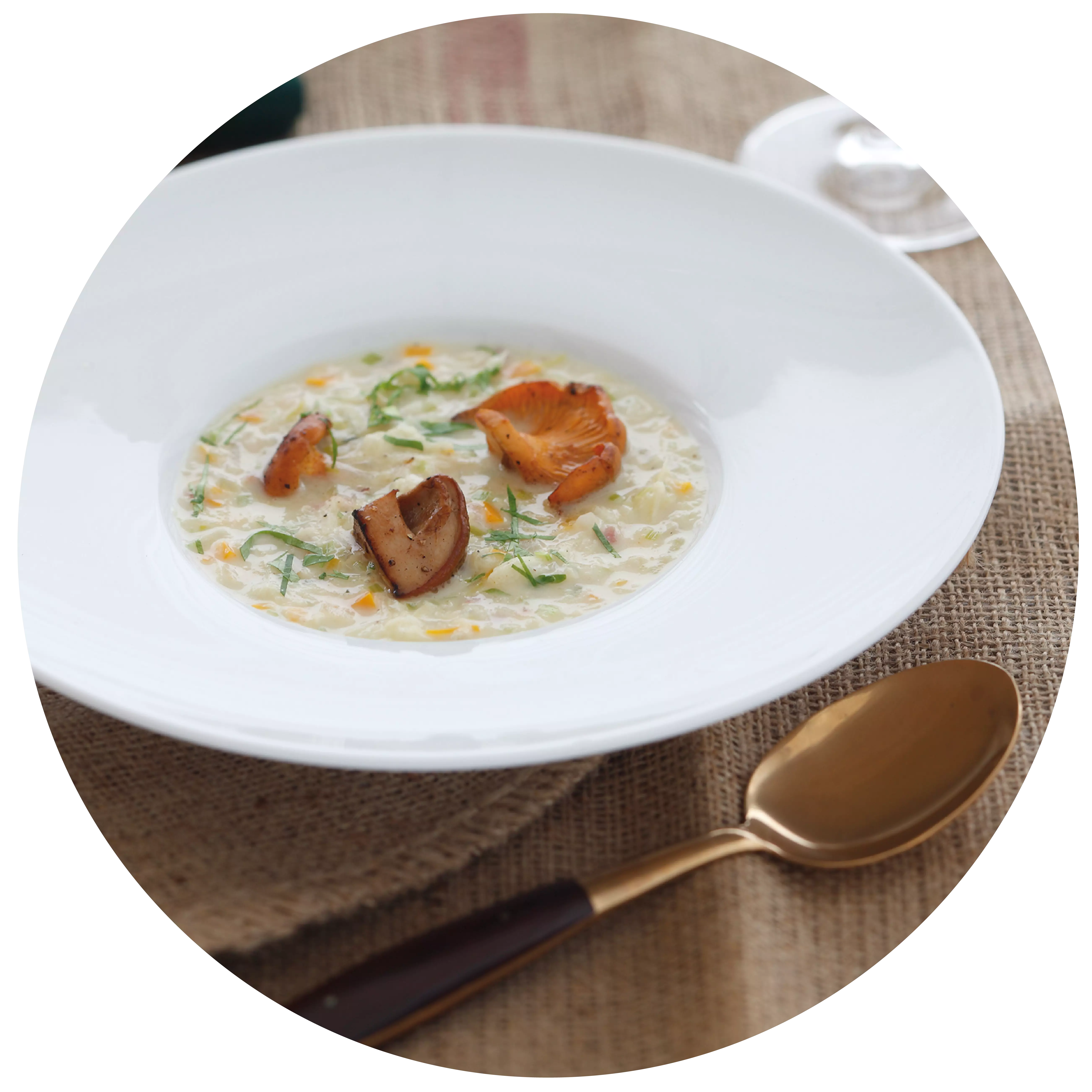
with wild mushrooms Cream of potato soup
with wild mushrooms
- 300 Gramm geschälte Kartoffeln
- 100 Gramm Wurzelgemüse
- 100 Gramm Waldpilze
- 1 ganze Zwiebel
- 1 ganze Knoblauchzehe
- 30 Gramm Speckwürfel
- 40 Gramm Margarine
- 750 ml Brühe
- 200 ml Sahne
- 1 Zweig Thymian
- nach Belieben Petersilie, Butter, Salz, Pfeffer, Muskat
Clean, wash and finely dice the root vegetables. Finely dice the onion and garlic clove and finely chop the thyme. Sauté the diced bacon with the margarine in a pan until lightly browned, add the diced onion, garlic, root vegetables and thyme. Sauté, add the stock and cook for 2 minutes.
Finely grate the potatoes, add to the soup and cook for a further 5 minutes, add the cream, season and flavour. Clean, wash and chop the mushrooms and sauté in a pan with butter. Season with salt and pepper, sprinkle with chopped parsley and pour over the soup when serving.
- Riesling (trocken)
- Riesling (halbtrocken & feinherb)
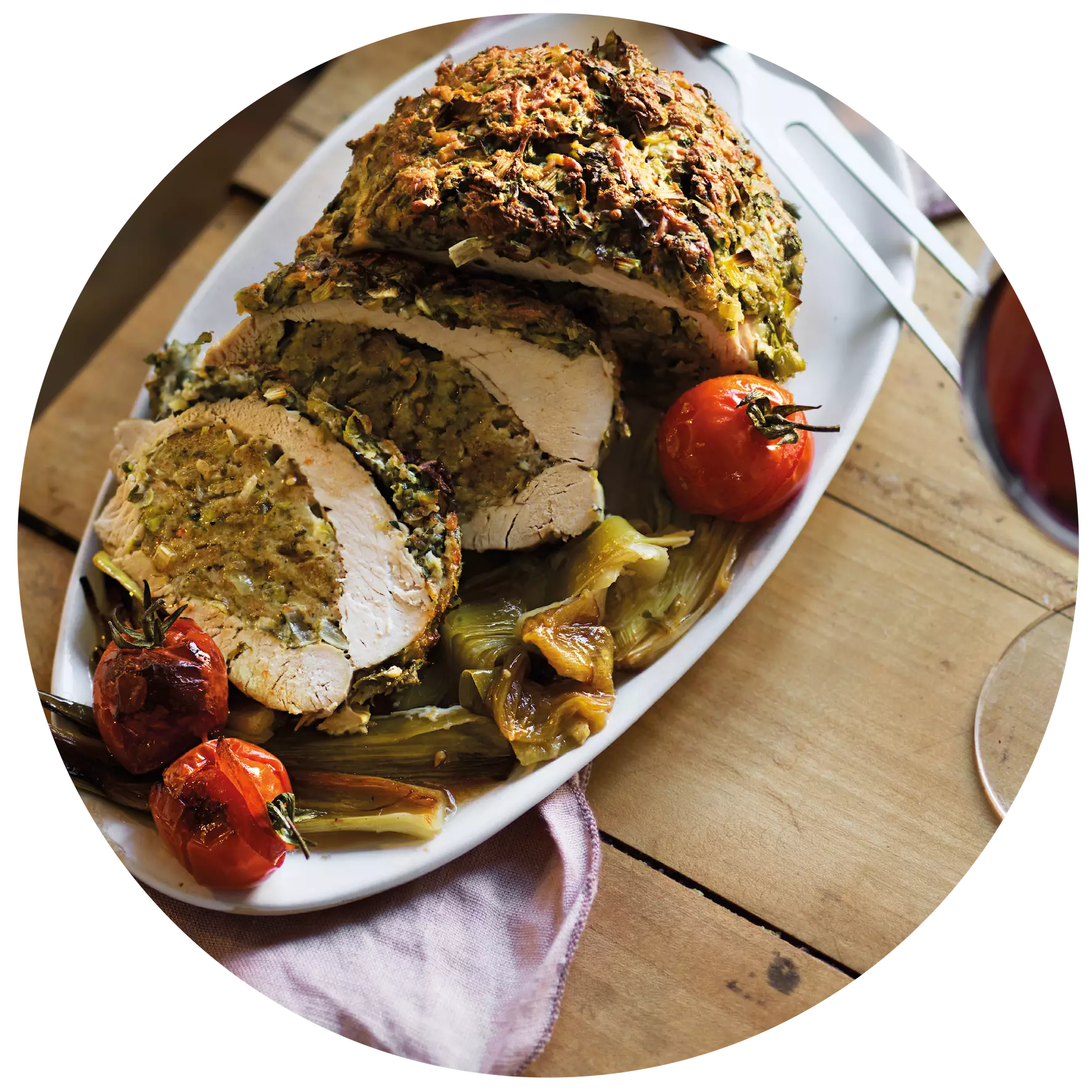
with herb crust Roast turkey
with herb crust
- 600 Gramm Putenbrust am Stücke
- 0,25 Liter Weißwein
- 0,25 Liter Gemüsebrühe
- 4 ganze Tomaten
- 4 Scheiben Toastbrot
- 2 ganze Eier
- 2 Stück Zwiebeln
- 75 Gramm geriebener Emmentaler
- 1 Stange Porree
- 1 Bund Schnittlauch
- 1 EL Olivenöl
- nach Belieben Salz & Pfeffer
Wash the meat, pat dry and cut a deep pocket lengthways. Crumble the toast. Wash and chop the herbs, peel and dice the onions.
<p
<p>Preheat the oven to 200°C (top and bottom heat). Place the bread, herbs, onions, cheese and eggs in a bowl, mix thoroughly and season. Stuff 2/3 of this mixture into the turkey breast. Pin the opening with wooden skewers and tie up crosswise with kitchen twine. Place the roast in a roasting tin and brush with oil.
Roast in the preheated oven for approx. 1 hour. Gradually pour in the white wine and vegetable stock.
<p
<p>Clean and wash the vegetables. Cut the leek into pieces and add to the roast with the whole tomatoes after 30 minutes.
About 20 minutes before the end of the cooking time, spread the remaining third of the herb mixture over the roast and finish cooking.
Arrange on plates with the vegetables and serve. Serve with rice.
- Pinot Gris (trocken)
- Chardonnay (trocken)
This might also interest you
-
Wine knowledge Prädikat Categories All about Kabinett, Spätlese, Auslese, Beerenauslese, Eiswein and Trockenbeerenauslese in a nutshell.
Learn more