
Prädikat Categories
All about Prädikat Categories in a nutshell!
Facts
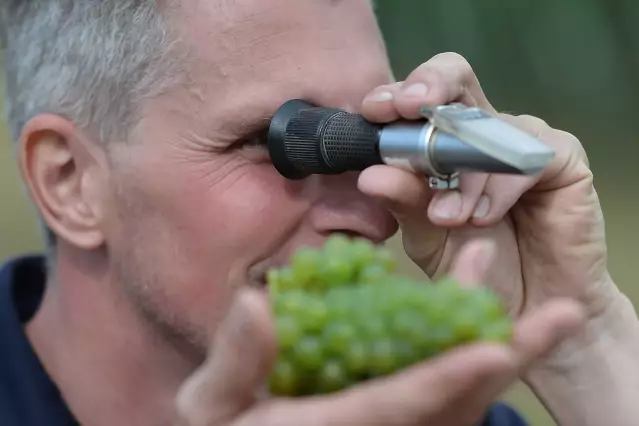
We all know these terms: Kabinett, Spätlese, Auslese, Beerenauslese, Eiswein and Trockenbeerenauslese. For each Prädikat, there is a defined minimum must weight depending on the grape variety and wine-growing region. In southern wine-growing regions, the requirements are usually higher. In hardly any other country is there such a great differentiation in wine qualities as in Germany.
The Prädikats in ascending order:
- Kabinett: fine, light wines from ripe grapes with low alcohol content
- Spätlese: ripe, elegant wines with fine fruit, which are harvested a little later. These wines are more intense in flavor and concentration, but not necessarily sweet.
- Auslese: fine noble wines from fully ripe grapes, unripe berries are separated out. Often intense in aromas and taste but not always sweet.
- Beerenauslese (BA): full, fruity wines made from individually-selected, overripe berries that are usually infected by Botrytis cinerea (noble rot). These are rarities, harvested only when exceptional weather conditions enable the grapes to ripen to this extent. They are notable for their longevity (can be stored for decades). Remarkably rich, sweet dessert wines, or to be enjoyed by themselves.
- Ice wine: made from grapes as ripe as BA, but harvested when it is at least minus 7 degrees celsius and pressed while frozen so that only the fruit concentrate is squeezed out. Truly unique wines with a remarkable concentration of fruity acidity and sweetness. They are becoming more of a rarity as Germany experiences warmer winters and the minimum temperature needed for harvesting is occurring less often.
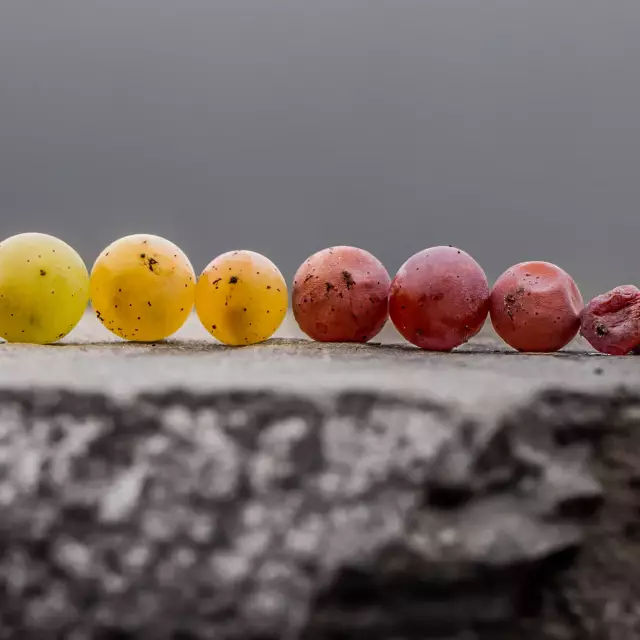
- Trockenbeerenauslese (TBA): This is the top of the quality pyramid, rare wines from shrunken, shriveled, noble rot berries, that cannot be harvested every vintage. These rich, sweet, luscious, honey-like wines can age for decades.
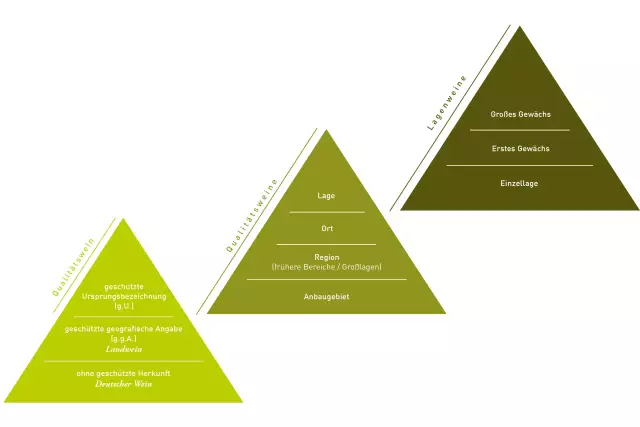
Prädikatswein and Qualitätswein must come 100% from one of the 13 German growing regions and have passed the quality wine test. Quality wines may be enriched (chaptalised) with a legally limited amount of sugar before fermentation in order to increase the alcohol content. Prädikat wines may not be enriched.
Which wines are at the top of the Prädikat pyramid?
Made from raisin-like shriveled, noble rotten berries, Trockenbeerenauslese is the top of the quality pyramid.
Varietals

More recipe ideas
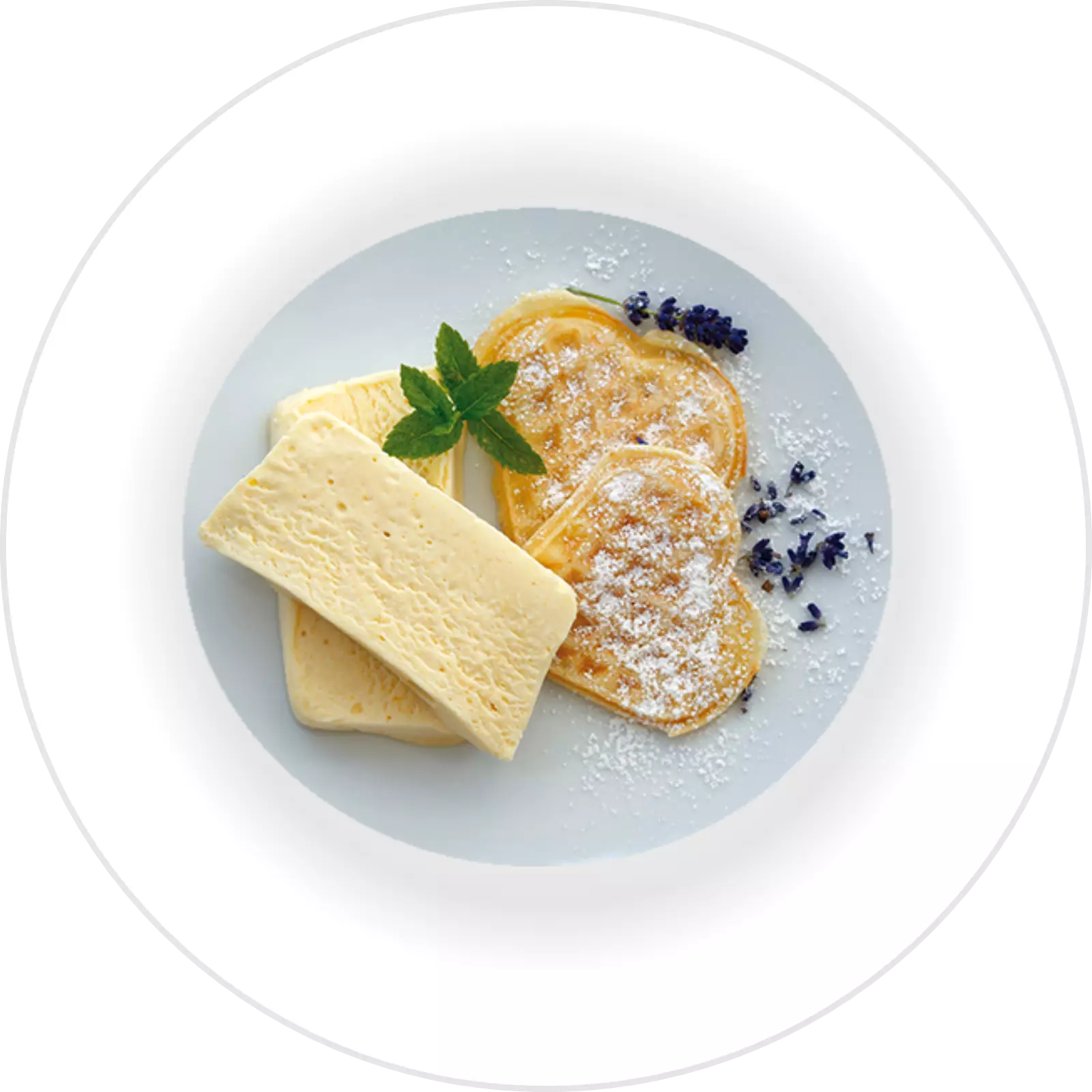
with semi-frozen goat's milk Lavender waffles
with semi-frozen goat's milk
- 2 Stück Eigelb
- 60 ml Ziegenmilch
- 500 Gramm weiße Kuvertüre
- 125 ml Sahne
- Abrieb und Saft einer halben Orange
- 2 cl Tresterbrand
- 8 Blatt Minze
- 125 Gramm Mehl
- 50 Gramm Zucker
- 70 Gramm Butter
- 2 Eier
- 1 Messerspitze Backpulver
- 1/2 EL Lavendelzucker
- 175 ml Milch
Semi-frozen goat's milk: Beat the egg yolks and goat's milk in a bowl over a hot bain-marie until creamy. Remove from the bain-marie and beat the cream until cold. Flavour with the zest of the orange and the marc brandy.
Liquefy the couverture in a bain-marie and stir into the lukewarm egg mixture. Whip the cream until stiff and carefully fold in. Line a parfait tin (triangular or gutter shape) with cling film. Pour in the mixture and smooth out. Cover well with cling film and leave to freeze in the freezer for at least 8 hours.
About 20 minutes before serving, remove the mould from the freezer and turn the parfait out of the mould. Remove the foil and cut the semi-frozen parfait into 8 slices.
<p
Lavender wafers: Lightly mash the butter in a mixing bowl with a fork. Add the sugar and stir a little. Add half of the milk, the lavender sugar and the baking powder. Stir in the eggs and finally the rest of the milk. Mix everything well with a hand mixer for about 2 minutes to create a homogeneous, slightly liquid mixture. Bake the batter in batches in a waffle iron until golden brown.</p
Arrange 2 slices of semifreddo on each waffle on a flat plate and decorate with mint leaves.
- Riesling (halbtrocken & feinherb)
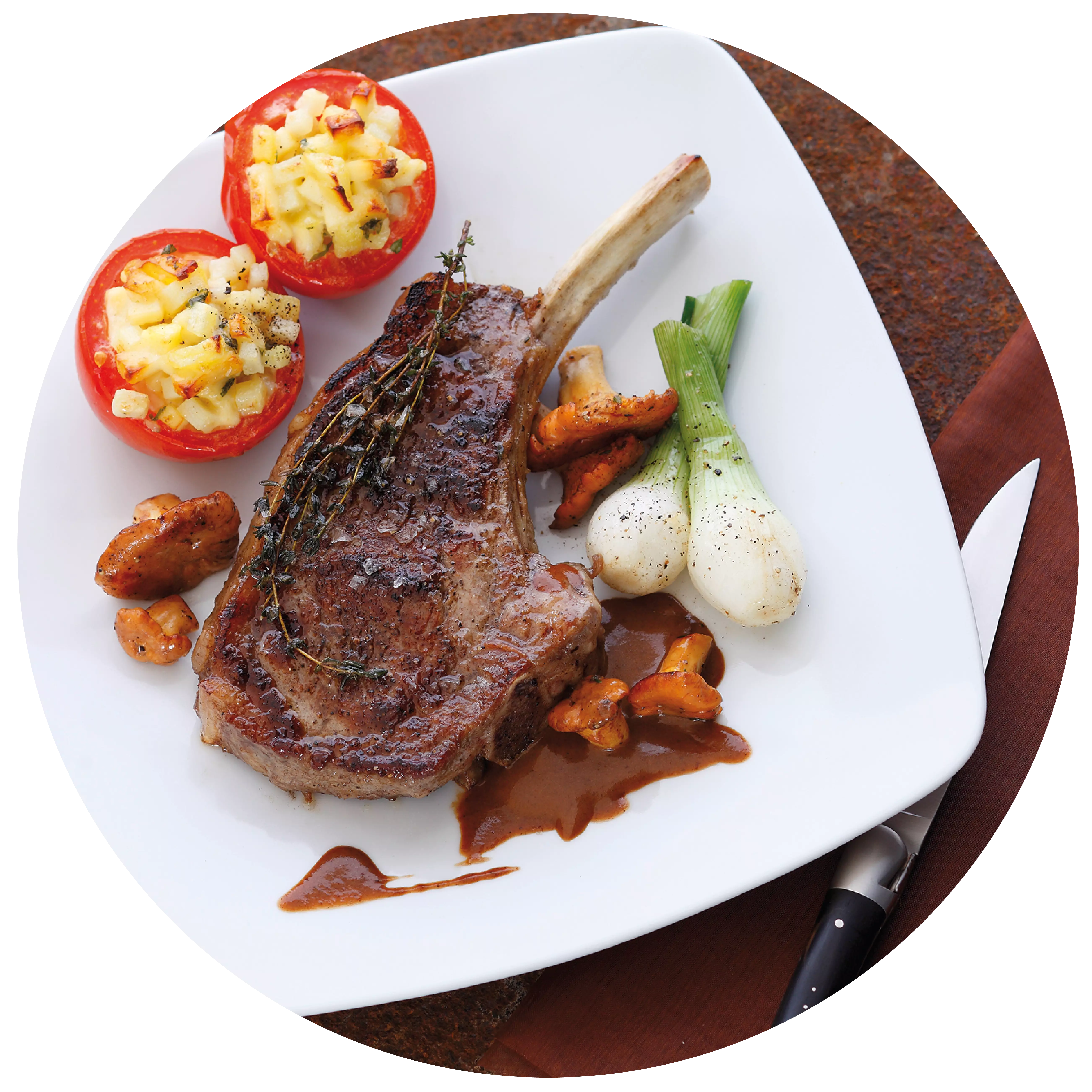
with chanterelle and onion leek, served with potato and grilled cheese ragout in grilled tomato Chop of Hunsrück veal
with chanterelle and onion leek, served with potato and grilled cheese ragout in grilled tomato
- 4 x 300 Gramm Kotelettes
- 250 Gramm Pfifferlinge
- 4 große Kartoffeln
- 2 große Grilltomaten
- 180 Gramm Flammkäse
- 50 Gramm Knollensellerie
- 200 ml Spätburgunder
- 200 ml Sahne
- 50 Gramm Butterschmalz
- 2 EL Butter
- 1 EL Rapsöl
- 6 Stück Lauchzwiebeln
- 1 kleine Knoblauchzehe
- je 1 Zweig Thymian & Rosmarin
- je 1 TL Majoran & Oregano
- nach Belieben Salz & Pfeffer
Peel the potatoes, celery and garlic clove, crush the garlic and cut the potatoes and celery into small cubes. Heat the rapeseed oil in a pan, add the potato and celery cubes, sauté briefly and top up with ⅔ of the cream. Season with salt, pepper and the crushed garlic and leave to simmer for approx. 6 minutes. Add the oregano, marjoram,
add a little thyme and the diced flambé cheese and remove from the oven immediately.
Season the veal chops with pepper, fry in the pan in hot clarified butter for approx. 3 to 4 minutes on both sides and then cook in the oven at 160 degrees for 8 to 9 minutes. Then leave the meat to rest briefly.
Cut the grilled tomatoes in half, remove the skin, place on a baking tray and fill with the potato and flambé ragout. Place the baking tray in the oven with the chops for approx. 6 - 7 minutes. Add 1 tbsp of butter and the sprig of rosemary to the roasting mixture, deglaze with the Pinot Noir, reduce a little and refine with the remaining cream. Season to taste with salt and pepper.
Clean the chanterelles and spring onions. Wash the spring onions well, cut into 5 cm pieces, blanch briefly in salted water and rinse in ice water. Heat 1 tbsp butter in a pan, add the chanterelles and sauté for 2 - 3 minutes. Add the spring onions and the rest of the thyme and season with salt and pepper.
<p- Riesling (trocken)
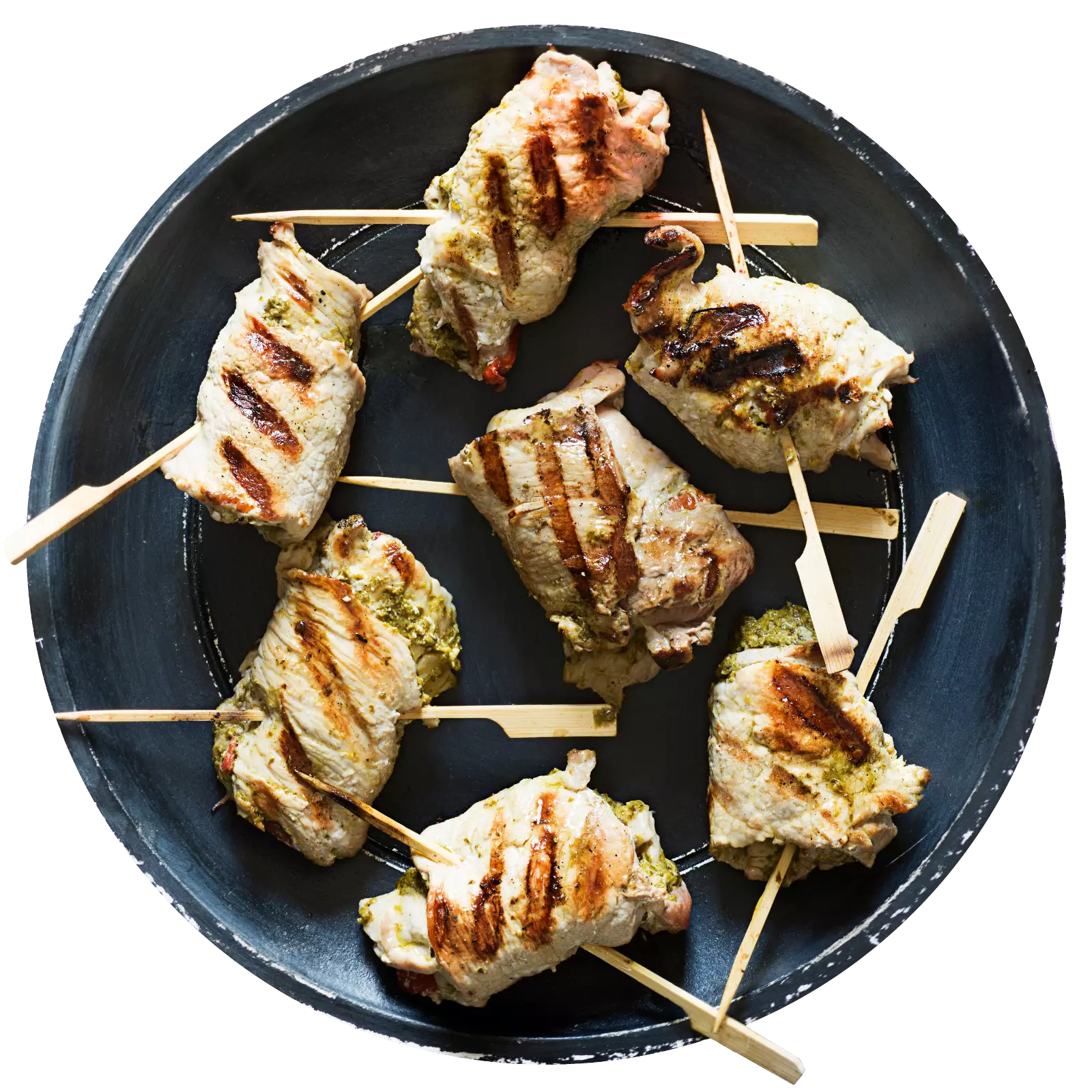
Stuffed, with paprika and pecorino Schnitzel rolls
Stuffed escalope rolls with paprika and pecorino
- Nach Belieben Pinienkerne, Basilikum, Knoblauch
- 8 Stück dünne Schweineschnitzel á ca. 75g & Holzspießchen
- 1 Glas rote geröstete Paprika
- 100 Gramm Pecorino-Käse
- Nach Bedarf Olivenöl, Salz, Pfeffer
Roast the pine nuts and leave to cool. Pluck the basil leaves and place in a blender with the finely chopped garlic, olive oil and pine nuts and blend gently. Finely grate the Parmesan and mix in. Season to taste with salt and pepper.
Wash the meat and pat dry. Drain the paprika in a sieve and finely grate the pecorino. Season the escalopes on both sides with salt and pepper and spread 1 tsp of pesto on each. Cover the escalopes with paprika, leaving approx. 3 cm free on one narrow side of each piece.
Spread the pecorino over the paprika. Roll up the meat from the coated side and pin in place with wooden skewers. Grill the escalope rolls on the barbecue for 20-25 minutes, turning if possible, and indirectly for the last 10 minutes.
- Spätburgunder / Pinot Noir (trocken)
- Lemberger (extra brut)
- Portugieser (trocken)
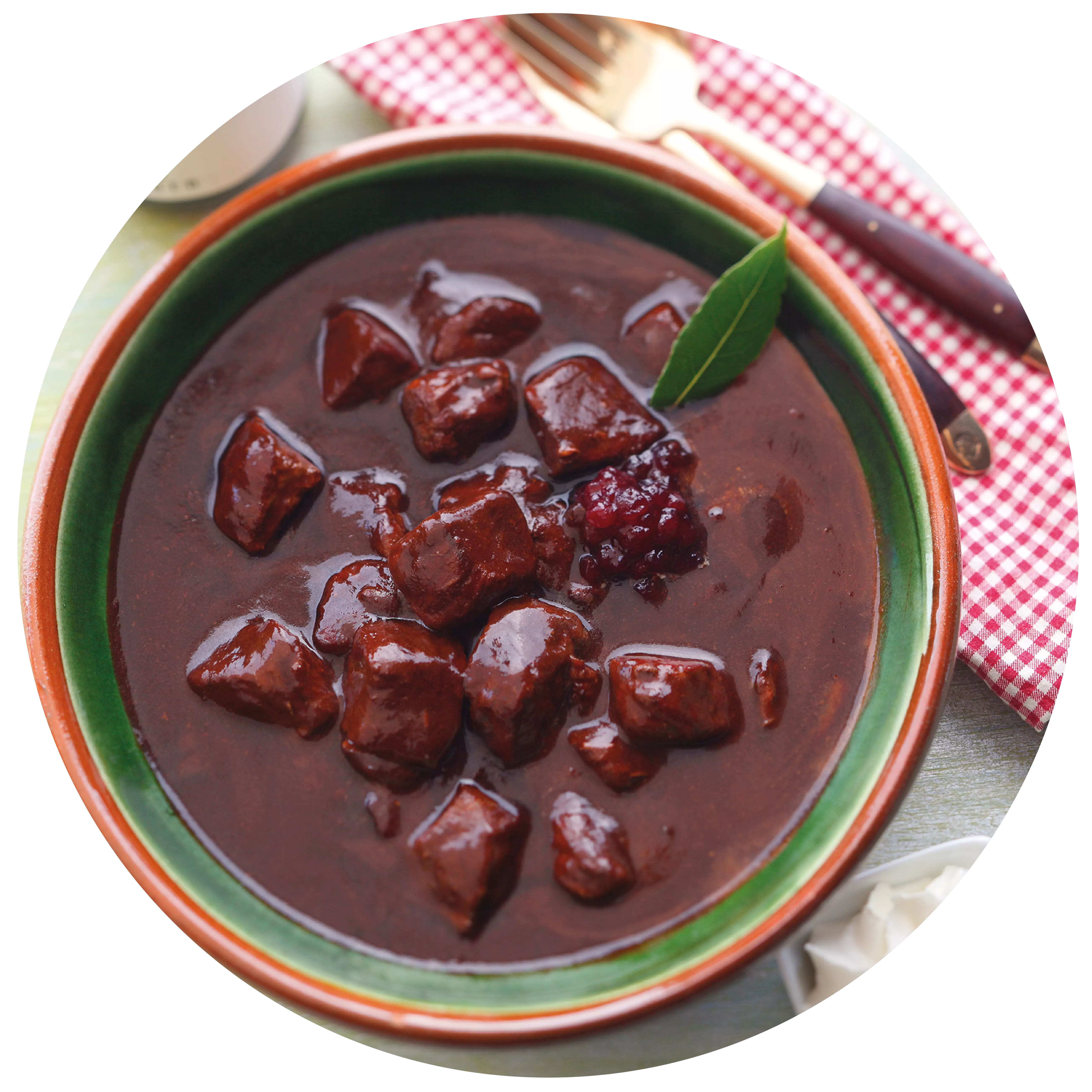
with strong red wine Wild boar ragout
with strong red wine
- 800 Gramm Fleisch vom Wildschwein (Keule o. Schulter)
- 80 Gramm Bauchspeck
- 100 Gramm Zwiebeln
- 60 Gramm Karotten
- 60 Gramm Staudensellerie
- 1 TL Tomatenmark
- 200 ml kräftigen Rotwein
- 100 ml Portwein
- 1 Liter braune Wildbrühe
- 1 TL Preiselbeeren
- 1 EL geschlagene Sahne o. Sauerrahm
- 20 Gramm Mehl
- 1 Stück Lorbeerblatt
- je 1 Zweig Rosmarin und Thymian
- 4 zerdrückte Wacholderbeeren
- 1/2 TL Senf
- nach Belieben Salz & Pfeffer
Clean and wash the vegetables and cut into evenly sized cubes.
Remove the fat, skin and tendons from the wild boar meat and cut into 3 cm cubes. Season with salt and pepper and sprinkle with flour. Heat the oil in a frying pan and brown the meat on all sides. Add the vegetables and diced bacon and fry. Add the tomato purée and stir fry. Deglaze with the red wine and port, reduce and pour in the brown game stock. Add the spices to the meat in a small spice bag and leave the ragout to simmer in the oven at 160°C for approx. 1½ hours.
Then remove the pieces of meat, remove the spices, strain the sauce, add the cranberries and mustard and leave to reduce for about 15 minutes. If necessary, thicken with a little cornflour. Serve with the whipped cream.
- Spätburgunder / Pinot Noir (trocken)
Events
-
Show
winetasting in our winery - cheese & wine
Mainz-Hechtsheim
This might also interest you
-
Wine knowledge New Origin Pyramid for Qualität and Prädikat Wines The German wine law changes
Learn more