

Organic cultivation
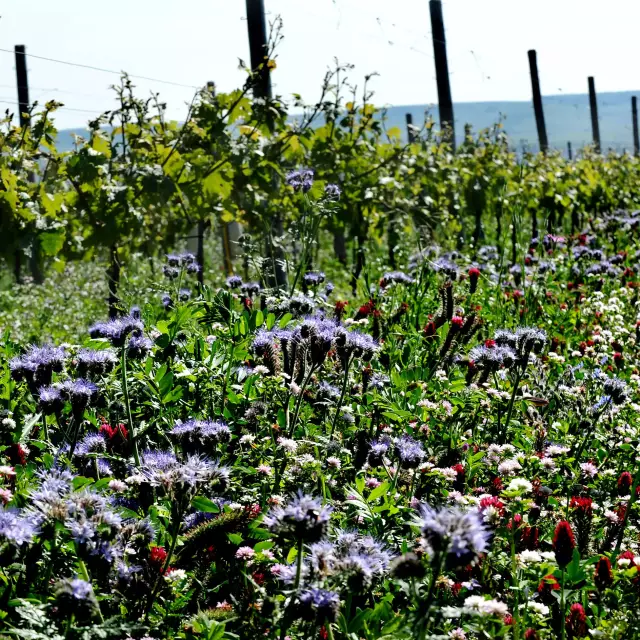
The area under organic viticulture has doubled over the past ten years. 15,800 hectares of vineyards were certified as organically farmed in 2025, representing 15.5 percent of the total vineyard area.
Facts
-
15,5 %
of the total area
Organic viticulture focuses on maintaining a balanced ecosystem in the vineyard. This is achieved without the use of synthetic chemicals: It begins with fertilization using humus, compost, or other organic sources of nutrients and continues with plant protection that avoids synthetic chemicals. Natural plant fortifiers are also often used to combat powdery mildew and downy mildew, in order to increase the vines’ resistance. To preserve soil life and biodiversity in the vineyards as actively as possible, winemakers plant a wide variety of plants between the rows of vines.
The transition from conventional to organic viticulture often takes place at wineries when there is a generational change. The transition period leading up to organic certification lasts three years. Since the 2012 vintage, an EU regulation has been in effect that governs not only work in the vineyard but also the winemaking process for organic wines.
What Does an Organic Winemaker Do with Baking Soda in the Vineyard?
Baking powder is an effective remedy for controlling downy mildew.
This might also interest you
-
Wine knowledge PIWI - fungus-resistant vines Especially resistant to fungal diseases
Learn more


