
Keschdeweg (Chestnut Trail)
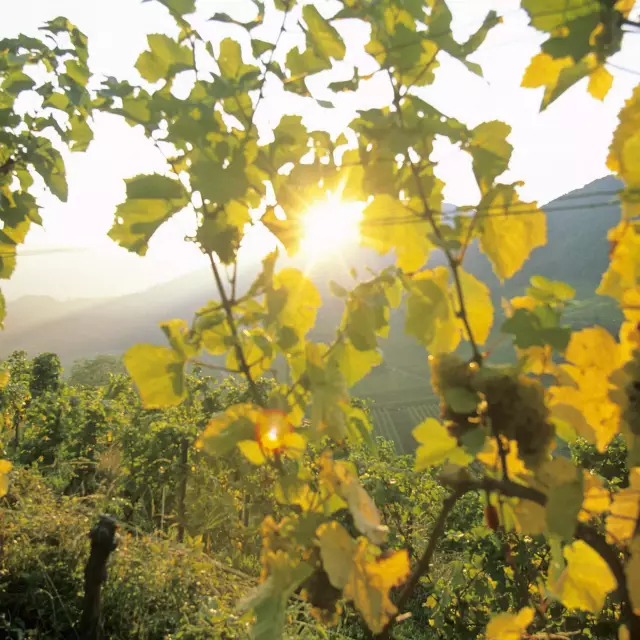
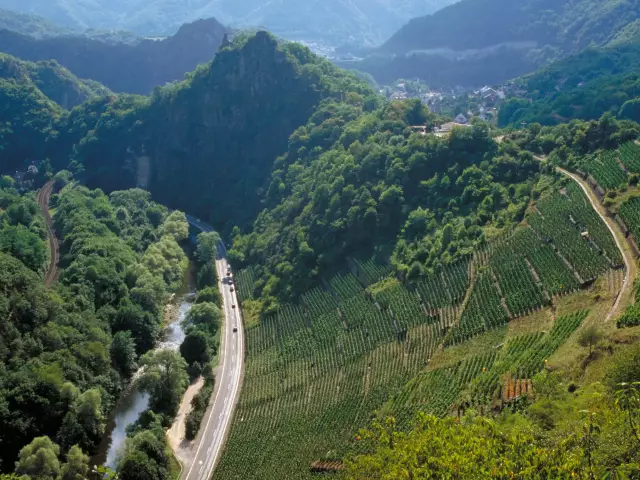
Der Pfälzer Keschdeweg (Kastanienweg) führt uns durch das Biosphärenreservat Pfälzerwald hinaus in sonnendurchflutetes Weinland, vorbei an vielen Esskastanien, die hier aufgrund des milden Klimas wachsen und im Herbst Früchte tragen.
Facts
-
24 km
Distance
-
7 Stunden
Duration
-
840 m
Height
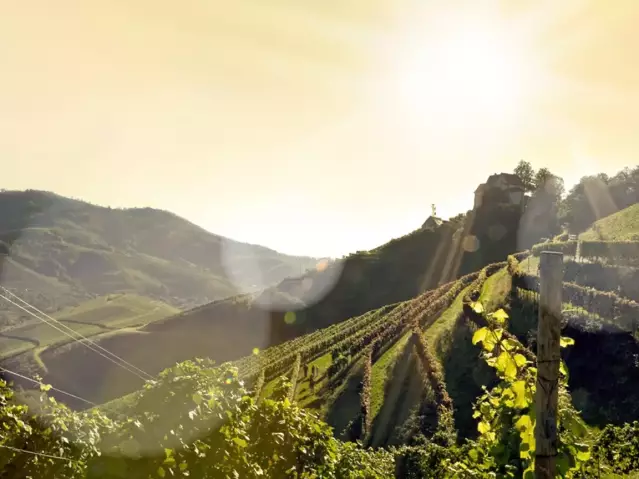
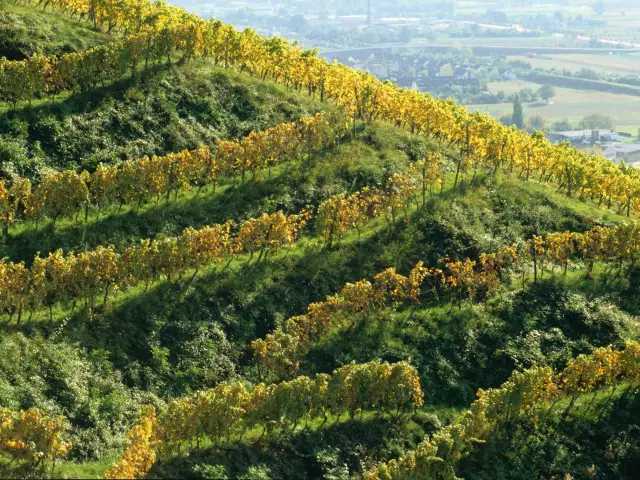
The Pfalz Keschdeweg (Chestnut Trail) leads us through the UNESCO Biosphere Reserve of the Pfälzerwald and out into the sun-drenched wine country, past many chestnut trees that thrive here due to the mild climate, bearing their fruit in autumn.
Before heading off on the 24 kilometer route from Burrweiler, heading to Weyher, drop in to the Meßmer winery with its beautiful vinotheque. This will be one of many tempting stops along the way. After enjoying the wonderful landscape, we reach Weyher and can take another little break in the numerous places offering refreshments throughout the year. Two winegrowers with wine bars, Otmar Graf and Valentin Ziegler, invite you to take a refreshing break in autumn.
Our next stage leads to the picturesque wine town of Rhodt unter Rietburg. The facades of the houses, almost entirely surrounded by vine leaves, offer an unforgettable romantic sight from spring to autumn. Literally at every turn, you can see the town’s long wine-making tradition. This is represented first and foremost by old wineries, such as Weingut Christian Heußler, which has been in operation since 1750. The local gastronomy savoured with regional wines may put a stop to your hiking ambitions, but you can always come back to indulge in these culinary delights. Renowned are the restaurants "Alter Kastanienhof" (alter-kastanienhof.de), "Theresienhof", "Vinorant" in the Fleischmann-Krieger winery (fleischmann-krieger.de) and the winery, wine bar and hotel Felix Waldkirch (weingut-waldkirch.de) amongst many other offerings.
Let us not digress too early, but continue on our way towards Edenkoben with a small detour to the Villa Ludwigshöhe palace. This was built by King Ludwig I of Bavaria from 1846 - 1852. At that time the Pfalz still belonged to Bavaria. Even after his abdication in 1848 as a result of his affair with the dancer Lola Montez, Ludwig I regularly spent the months of July and August in the Italian-style castle every two years until 1866. The building, which belongs to the state of Rhineland-Pfalz, has been used for concerts since 1975. On the upper floor of the castle there is a permanent exhibition with works by the impressionist painter Max Slevogt.
Back on the wine trail to Edenkoben, we pass many well-preserved historic winegrowers' houses until we reach St. Martin, with its romantic medieval alleys, all heritage listed. Here the connoisseur is spoilt for choice with numerous wine tasting rooms, vinotheques, Straußwirtschaften (temporary local wine bars) offering refreshments, a wine hotel and restaurants. Amongst these are the Kirchstübel wine bar (kirchstuebel.de) and the Gernert winery and hotel GARNI (weingut-gernert.de).
Continuing on the Keschdeweg we see the famous Hambacher Schloss (hambacher-schloss.de), popularly known as “Keschdeburg” because of the surrounding chestnut forests. This castle, built in the 11th century, has been the cradle of the German democracy movement ever since 1832 when Pfalz citizens dissatisfied with their Bavarian administration, spontaneously staged a protest festival.
At Hambach we have also reached our destination, Neustadt an der Weinstrasse. The city of Neustadt with its 9 wine villages, stretches in front of us, embedded in a sea of more than 2,000 hectares of vines producing around 20 million liters of wine each year. The countless Neustädter winegrowers, wine bars and restaurants offer something for every taste and palate - from high-quality gourmet cuisine to hearty home cooking.
The culinary offer is by no means limited to Pfalz specialties such as liver dumplings, bratwurst and sausage, but also sophisticated creations of Mediterranean lightness are masterfully prepared. After all, this "secret wine capital of Germany" is located in a region with a Mediterranean flair and not far from the Alsatian border. This is where the Pfalz cooking tradition meets Mediterranean elements and the sophisticated “savoir vivre” of France. All that remains is to wish you Cheers and Guten Appetit!
Marker
White square with cracked chestnut (yellow-brown) and the name "Pfälzer Keschdeweg".
Route Character
Varied path, well built, past castles and vineyards with a view of the Rhine plain and the Pfalz Forest. It runs along many chestnut trees that provide shade even in summer.
Parking
Various parking spaces in the center of Burrweiler. Very good connections to public transport from the stations at Edenkoben or Neustadt a. d. Weinstraße.
Contact
-
Pfalzwein e.V.
67433 Neustadt an der Weinstraße- Martin-Luther-Straße 69 Germany